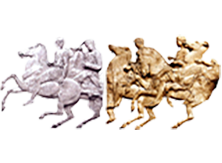

History Doesn’t Care About Our Feelings, was the first of three conversations with historian, David Olusoga and Collections and Learning Curator, Melanie Hollis to discuss the function of history and the institutions that preserve it. The thought-provoking hour long first session forms part of Colchester and Ipswich Museum’s Decoloniasation and Democratisation.
Melanie and David covered all things museums, storytelling and history. To watch the video, follow the link below:
https://www.youtube.com/watch?v=tW7VTJtCgYA&t=5s
To find out more about Colchester + Ipswich Museums talk series, click here: www.cimuseums.org.uk/dandd
Both David and Melanie felt that in the last 18 months, history was being made at a faster pace than before. For David a positive was the toppling of the statue of Edward Colston and a negative was the attack on the National Trust, for commission historians to study their properties. David refered to theses as ‘big political mements’. He republished his book : ‘Black and British:A Forgotten History’ to add the Windrush scandal and the toppling of Edward Colston, as landmark history moments of the last five years.
David questioned the function of history and asks if history exists to make us feel good about ourselves, and to perpetuate and shore up ideas of exceptionalism. Or is history a much more challenging engagement with the past of our nation, and if it is the latter, we need to recognise it. Often to make history palatable we marginalise or erased aspects of the past and David feels that it is the discarded chapters which have accelerated events in the last 18 months.
Melanie added that Colcester and Ipswich had been working on exhibitions aptly entitled the ‘Power of Stories’. And asked David about rewriting history versus acknowledging what has already been left out. Also what were the consequences of not knowing our history, and the benefits to society and communities, by acknowledging historical truths, reflcting on them and seeking redress where it is doable.
David replied that to start with, we must recognise politicised, false flag arguments for what they are.The idea that investigating history, expanding our knowledge, looking at the chapters that have been discarded, entails the rewriting of history. He feels this is an untruth and that the people that propagate that idea know it is an untruth. We need to recognise that argument for what it is, exhaustive and unproductive. The real question is how we tell broader histories that include black stories and the family stories of millions of people. In so doing we can have a history, a British history that is fit for purpose, fit for Britain of the 21st century. David sees that the problem lies with those that wish to continue to have history as a form of national celebration, that perpetuates myths of exceptionalism, that erases stories that do not fit with that narrative. Then there are those like David that want an expansive history that include the stories and the back stories of everyone in Britain. He highlights that 14% of the population of Britain are minorties.
David also adds that a history written in 1920 cannot function for a demographically transformed nation that Britain will be in the middle of the 21st century. Decolonisation is one of the names that is given, in some ways as a pragmatic and funtional attempt to build a future that actually reflects the stories that exlain why we are all here on this islands, trying to make sense of our place here and our history. That is also a danger with our soft play version of history, because the stories you need to edit outin order to make history recreational, a place of greater safety, to only feel good about yourself,very often these stories about empire and imperial conquest and vilence, about migration and movement, abot slvety and indenture, those stories that dont fit with that narrative, because they are challenging and difficult and inglorious, backstories of how 14% of us got here.
David is half Nigerian and half Geordie as his mother’s family was Scottish from Newcastle.What allowed David’s parents to meet in Newcatle in the 1960’s, those stories go back to the late 18th century and Britain’s colony in Sierra Leone, the supression of the slave trae in Yoruba, Nigeria . The ancestors of his father were brought up by missionary societies in Sierra Leone and then returning to Lagos, spreading their ideas along the coast. It is to do with the connections between the church mission society and certain Universities in Britain, to which his father was eligible to attend because his schools were connected to those missionaries connected to those societies. So David feels like a product of that history, which doesnt make any sense. Being a Nigeria Georgie, he needs that backstory and that was what was missing from his edcaton when he was growing up. And although he doesn’t feel that his story is particularly exotic or unique, it is the stories that are needed to explain how we got here. No one ever put it better that Stuart Hall:’we are here because you are there’.
This Melabie used to lead onto the point of museums and their function.Many, many museums around Britain and that includes Ipswich have what they call local istory collection,but they also have a worlds culture collection or ethnography and Melanie questions these arbitrary divisions, when they probably worked when those museums were set up in the Victorian era and people were studied in that way. That however is no onger the case. People who were studied then are actually part of their community now. Part of Britain’s story and part of our local history. So she asks David what is his views on the power of museums and all of the material they have. Melanie says that museums are ‘dripping with evidence of empire’, and how they tell those stories and what our power as a storyteller in empowering people and preserving those histories but also reintroducing the nuances.
David replied that just as we arengaged in a process to find a histiory and build a history that workd for everyone , that is inclusive, that is decolonised. We’re also in the process of finding a function for museums, recognising that they played an intrising role in empire and that empre worked both ways. There is an imperial project of Europe particularly with encyclopaedic national museums but not exclusively those. Smehing that people have appreciated more recently with work of Dan Hicks, is how ubiquitous, how common, how atomised the artefacts taken in the 1890’s from Benin in Nigeria after the Bitish raids. Dan says you’re never a few miles away from a Bebin Bronze in Britain! The rality is that museums are exceptionally valuable places. So the question is ow do w keep the value of museums, how do we find ways of acknowledging, the centrality of empire in story of museums. How do we negotiate with museums using the materials in museums and redistributing the matetials in museums to acknowledge that acknowledgement. That we understand history and we need to amend history. What is the new role of museums? David asks this question as someone who is involved with museums as an advisor to some and he is very interested in the world of museums although he is not a museum practicioner. He is a strong believrr in restitution and he believes we have a huge job of acknowledgement, of research , of understanding the accession process that led to these collections, and of resttution, and of support to museums in communities from which these objects were taken. But we also need to find within that process of creating new functons for museums. There’s a lot of practical things, for example most things in museums are not on display! Most of the things that pliticians are unhappy about being returned to host, indigenous communities, is not available to the public. When the British Museum refuses to return Benin bronzes when th cannot find display space for their collection is an insult to injury.
This process of trying to re-imagine the museum and acknowledge its colonial past, needs to be part of a process of recognising the mindset of the missions of collection. The mindsets of the men that left Britain and Europe to see out those objects. And this idea that distance somehow equated to time, that the people whose objects and ideas were being collected belongs to another time, and that an object made that year but 10,000 miles away was a relic in the same way as the Stone Age arrow tip and that this idea that there were primitive people for whom, had no history, which is what Hagel said about Africans. Who produced primitive Art, and there were cultured people, on a tragectory that produce culture, that is deep within the mindset of people who created museums and David believes this is encoded in museums and recognising that as well, the Germans had the neatest terminology for it. They spoke of ‘kulter volk’ and ‘natur volk’, people of culture and people of nature and David believes that division imposed upon people outside of Europe in the 19th and 18th century to an extent, is still imprinted in the way that museums are designed and in some of the thinking behind museums is as important as recognising the materiality of raids, loot and plunder. David also feels that people are more aware of the rais in Benin rather than the mindset that the people of Benin, were ‘out of time’ in the minds of those that happily distributed those goods ariund the world.
Melanie also added that it is the case in a lot of museums where some reinterpretation would go a long way but not only for the world cultures collections, but also of the British collections, which are more integrated than ever before. A lot of peoples history ad identity is bound up in both. To make sense of why Britain looks this way, you have to draw on all the collections and interpret them in a way that brings them together.
David agrees as he recalls being brought up in the North East were his ancestors had no choice but to leave the land in Scotland in the late 18th century, ending up in Glasgow as fodder for the industrial revolution and then ended up in Newcastle as that was the next boom town to go to and I was schooled in that family history, that history of industrial revolution. Every museum and heritage site I went to from school was about that history. My the museum David is most fond of is the African-American Museum on the Mall is the Museum of American African History and Culture and that has an exhibition about cotton slavery in the Deep South in the early half of the 19th century. Those two stories of American cotton slavery and the British industrial revolution are the same story. One part of that David was invested in every museum, every school lesson, every history lesson he had growing up because that story had been understood in complete separation from the story of American cotton slavery and I meet people 20-30 years younger than me whose school experiece is still that the industrial revoloytion existed in isolatuon from slavery in America, when the biggest product that Britain produced in the industrial revolution was not steam engines or spinning jennys but cotton, cotton clothing, and that the number one raw material, after coal, was raw cotton, produced by half of the four million AfricanAmericans who lived in slavery before the Civil War. The Economist Magazine estimated in the 1850s that one in five people were, to some degree, entwinned with the cotton economy. Four and a half thousand mills in Lancashire, clustered around Manchester. The fact that David had to travel to Washimgton DC to see the history of a slave system that poured its raw material in Lancashire, and into the central belt of Scotland, and in parts of Yorkshire, and the fact that in those museums in tose parts of the world are utterly silent, many of them still today, to my absolute kind of depression. It was not long since David was filming in a heritage, cotton industry heritage site with no mention of slavery. No mention of New Orleans.No mention of Mobile. No mention of the vast armada of ships that carried the raw materials across the Atlantic. That, that disconects between history, is manifest, is made physical in museums. So these two connections that historians need to be better at making, museums need to play their role. It is appalling that we still have museums and heritage sites that talk about these histories as if they are national histories that have no international dimension. The idea that the story of cotton, the raw materials produced by African Americans that the finished materials dumpted on India to destroy the Indian cotton industry that pre-dated the British one by centuries, that the copying of Indian fabrics, the industrial espionage behind that. The idea that this is a story that can be stripped of its international and colonialist dimensions is deeply problematic. The historical and museum profession have a huge amount of work to do.
Hats off to all those striving for tht said Melanie including teachers,because lately there is a tangible shift where teachers are doing what they can to diversify the curricullum to bring more stories. History teachers accrding to David are doing this despite not because bof the curricullum or government . They get no support and schools are deciding after their own volition, he knows teachers buyng their own books with their own money. Lack of materials to teach global histories. Teachers doing heroic work. Many young teachers incfedubly passionate which is great . Their generational positioning is critical here. They are a people from a generation with a radical different relatuonship to history than their parents ir grandparents. They are a generation tht has been brought up with diversity and globalisation all around them . They feel it is their duties t teach histories that work and reflect back stories and families of the children in their classrooms. Broading out what they teach to be inclusive.And this is important for all children that these prospectives become more global. Cildren als have greater access to knowledge in this digital age. They can find the missing chapters .
Melanie added that the work done is amazing and as museum practiioners she’s like to add that rhey’d love to support the work teachers are doing. We have evidence in our collections so to be able to combine the objects and the stories is very powerful. Then Melanie asks David how far museums should go in supporting people who are feeling uncomfortable because they are learning new thngs.about histiory that they werem’t told and what are our responsibilities there?
David added that people who rcognise the need for change must learn to recognise something more, that it is really difficult for some people. David then uses the example of Coulsdon and how many Bristolians were brought up thinking he was a great man, a philanthropist. They did not mention that he was a slave trader. They did not know the scale of the cities involvement in the slave economy. e need to find a way of communicating that these stories wre darker more complicated, more problematic, taught at schools. And for people for whom these histories have become part of their identity, we need to recognise that this is frightening. Nothing in that process of recognition or empathy changes the fact thst someone like caulston was a mas murder. He was complicit as the governor of the Royal African Company complicit of enslavement of around 84,000 people and the deaths of 19, 000 with 6- to 3,000 children. That doesn’t change our responsibilities to them because they are the ones who have been erased. NotClsin who is on display in a museyum in Bristol. Nothing changes the imperayive of us eflecting honestly the problematic chapters of our history, rather than the celebratory ones, and finding forms of history that workd for us in the 21st century. I is possible to be true to the history and have empathy and understanding of why it is challenging for many older people David feels that museums ae trying to navigate this debate with empathy. Great example is the Mayor of Bitol at the centre of this who is trying to encourage a dialogue in his city. He is himself have Bitish, half Jamacain and those division which many politicians are truing to expand and explout, run through him. We do need to have empathy but having empathy doesnt change history .
Language, terminology and phrases can be difficul David agrees.Some words made more difficult by politicians who stoke division for electora purposes. David proposes we find narrative ways of talking rather than terminological ways of desvribing it. David likes to use the example of the Moai taken from Easter island. Impossible for him to understand what it means to someone from the Rapa Nui nation because of the way I have been acculturated. It will never mean for David what it means to them. We cannot understand its abscence in the same way as they do. If we are genuinly trying to strive for a world in which other peooples experieces and cultures are of equal value, then it is beholden on us to believe people wheh they say you’re improsenmrnt of that object is offensive to us in ways that you dont appreciate. If we really litened to that then that object would not be standing in London today.
The bebates about museums is about wether or not we still live in a world of cultural heirarchies. We normalise the abnormal in order to prove dominance. The idea that museus are laces full of objects from people who were lesser than us, people who were deemed to have no fututre, as well as being trapped in the past . Places that history is celebrated like museums, there is also a horrible toxcicity such a challenge culturally that words such as decolonisation dont get that across. What we need is stories . David believes we need artworks, great novels. Great films. Curators nor Historians awaken cultures to this reality. He thinks it is artists Most important book is Roots, deeply flawed work of fiction,
Melanie quotes Steve Jobs for the power of storytelling – art being the way we reimagine. Feats of imaginative transportation is something artists can achieve. Real cultural change cannot take place without art concludes David Olusoga.
Incredibly presumptions to feel you can tell someone else’s story rather than empower them to tell their stories.

Leave A Comment