
The last stage for the return of the Parthenon Marbles, Sakis Ioannidis and Costis P. Papadiochos reportng in Kathimerini
The last stage for the return of the Parthenon Marbles, Sakis Ioannidis and Costis P. Papadiochos reportng in Kathimerini
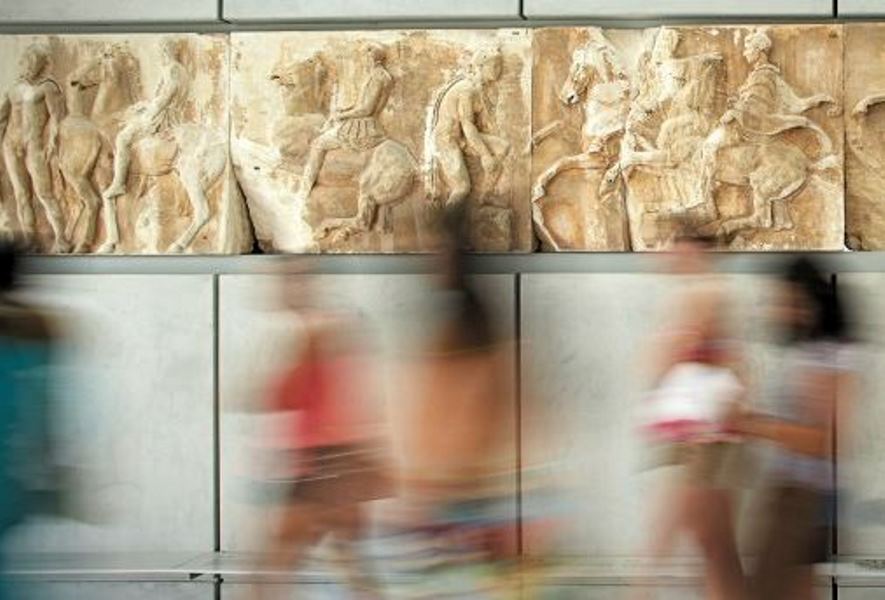
“We have reached an agreement covering 80% of the outstanding issues. However, with regard to the remaining issues, even making a step towards the additional 1% is not easy.” With the above statement, a person familiar with the negotiations described the stage at which discussions between Athens and the British Museum on the Parthenon Marbles are currently at, refuting scenarios about only technical details remaining for the immediate conclusion of the final agreement, but—even more so—about a possible impasse.
According to sources, there are three “obstacles” that must be overcome in order for the sculptures to be returned to the Acropolis Museum, through a formula that, while it could be interpreted as a “loan,” will have permanent characteristics:
Firstly, the range of exhibits to be returned by the British Museum. Athens’ minimum goal is to bring to Greece the antiquities that will restore the unity of the sculptures, while others that do not have the corresponding “relevance” – for example, the Caryatid removed from the Erechtheion – may remain in the British Museum. The difference between the two sides lies in the fact that Athens is seeking the return of as many sculptures in the second category as possible. Most importantly, however, it wants the list of possible returns to remain “open” so that the agreement with the British side does not imply that the “alienation” of the antiquities that will not be returned to Greece at this stage is final and permanent.
Secondly, the timing of the implementation of the potential agreement. The British side is reportedly seeking the exchange of antiquities (important Greek exhibits to be hosted by the British Museum as part of multi-year temporary exhibitions) to take place over a long period of time. On the other hand, Athens wants the exchange agreed upon for the reunification of the Parthenon Marbles and the restoration of the unity of the Parthenon Monument to proceed immediately, as negotiations between the two sides have already been going on for several years.
Thirdly, there continues to be disagreement regarding the hybrid legal formula that will be adopted for the return of the sculptures so that neither side violates its “red lines.” According to reports, the British Museum insists on wording that indirectly refers to “loaning” in order to protect itself against possible legal challenges. However, it is clear that Athens cannot accept an agreement that would imply the sale of ownership of the sculptures.
In light of the above, the recent statement by British Museum director Nicholas Cullinan (in The Times) that “plans are taking shape” is not far from the truth, but the distance that needs to be covered between the two sides is perhaps greater than implied.
However, this road seems to pass through the British Museum, as discussions surrounding the plans for its major renovation also include the room that houses the Sculpture, the Parthenon Galleries (Duveen Gallery), and there are many who see the museum’s redesign as the ideal timing for a possible agreement between the two countries.
For the English version of the article in Kathimerini on 01 June read the news regarding the ongoing discussions for the reunification of the Parthenon Marbles, visit ekathimerini.com