
Britain’s cultural ties with Europe and Michael Gove on the Parthenon Marbles
Britain’s cultural ties with Europe and Michael Gove on the Parthenon Marbles

“At a Spectator event in London (Tuesday27/8), I asked Paymaster General Nick Thomas-Symonds, the minister responsible for the UK’s relationship with the European Union, whether cultural cooperation could form part of the new “reset” in UK–EU relations.
Specifically, I asked if longstanding issues such as the Parthenon Sculptures might be considered within this new framework of partnership.” Evdoxia Lymperi, UK correspondent for ERT (Greek Broadcasting Corp.)
ERT: “Minister, you argue that the UK–EU reset is about reducing red tape, supporting business and strengthening cooperation with Europe. Greece has long raised the issue of the Parthenon Sculptures. Do you see cultural cooperation, including resolving longstanding issues such as the Parthenon Sculptures, as part of this new spirit of partnership with the EU?”
Nick Thomas-Symonds: “I can honestly say that the Marbles were not raised to me in the course of the negotiations with the EU. But on the wider issue of cultural ties, I do think they are extremely important… touring artists being able to travel more freely in the EU, and youth exchange schemes will be an important part of that.”
The minister’s response was careful and courteous, but he avoided the substance of the question.
Then came an unexpected intervention. Michael Gove, once one of the most powerful figures in government, serving as Chancellor of the Duchy of Lancaster, added with a wry aside: “It would be great not only to have a deal on the Elgin Marbles, but also one on the Rolling Stones as well.”
A familiar pattern
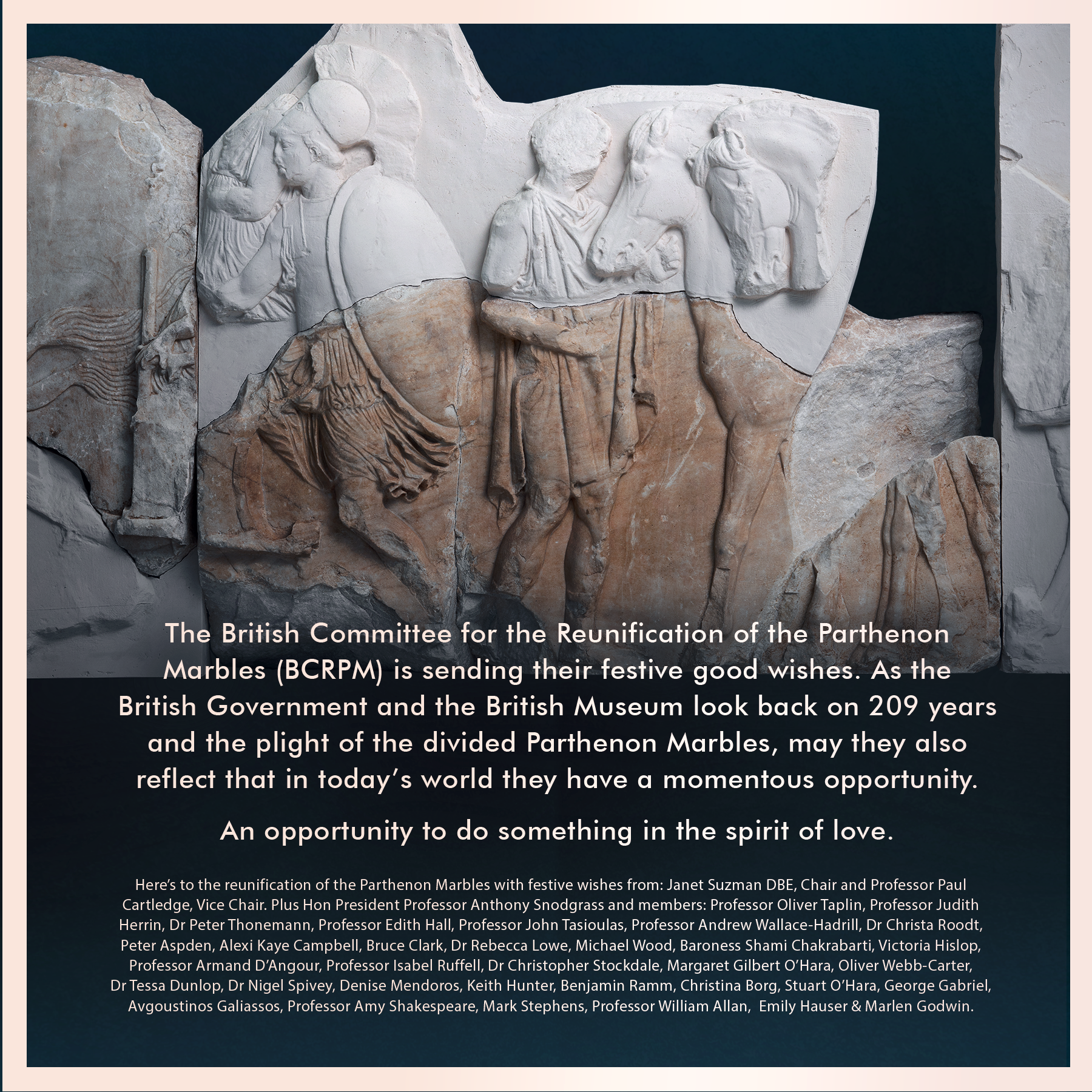
This was the first time Gove had said such a thing on record. Yet the dynamic is familiar: while in office, ministers avoid the question of the Parthenon Marbles. Once outside government, they often feel free to voice support for Greece’s longstanding request for reunification. The exchange underlined the continuing sensitivity of the issue in Westminster. It also showed how cultural heritage debates are shaped not only by history and diplomacy, but by the shifting calculations of political power.
The question remains.
This may not shift UK policy — the British Museum remains legally independent, and ministers consistently cite that fact. But it does highlight how political convenience, rather than cultural conviction, often sets the tone of the debate.
Evdoxia Lymperi, UK correspondent for ERT (Greek Broadcasting Corp.)