
British Museum glitzy gala ball, Janet Suzman agrees with Greece and suggests that the publicity adds to the reunification cause
British Museum glitzy gala ball, Janet Suzman agrees with Greece and suggests that the publicity adds to the reunification cause
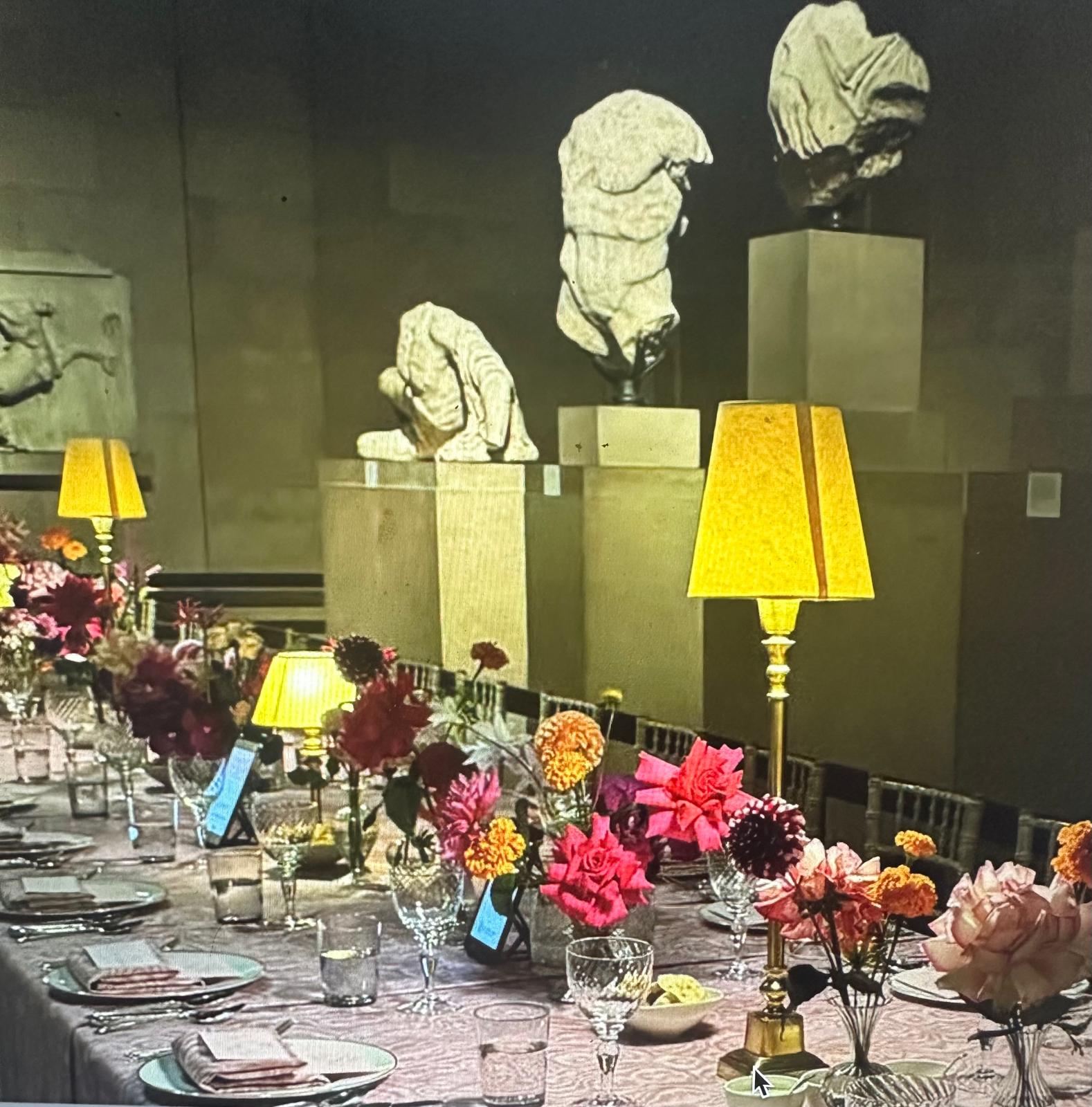
Minister Mendoni is not wrong, a dinner party in front of those ravishing marble figures is rather provocative. Starring in their stillness behind a long dining table of pinkish persons they outclass the beautiful people by miles, not one of whom can match their physical grace let alone their ancient symbolism.
– Janet Suzman, DBE,Chair of BCRPM
“Minister Mendoni is not wrong, a dinner party in front of those ravishing marble figures is rather provocative. Starring in their stillness behind a long dining table of pinkish persons they outclass the beautiful people by miles, not one of whom can match their physical grace let alone their ancient symbolism.
But I would rather the existence of these Parthenon Marbles were known to the man in the street than not, and if it takes a Museum ball to do it, then its fine by me. There are two sides to every coin and publicity is publicity. You can be sure that many more ordinary people will be aware of these miraculous Marbles today than yesterday.”
Janet Suzman, Chair of BCRPM
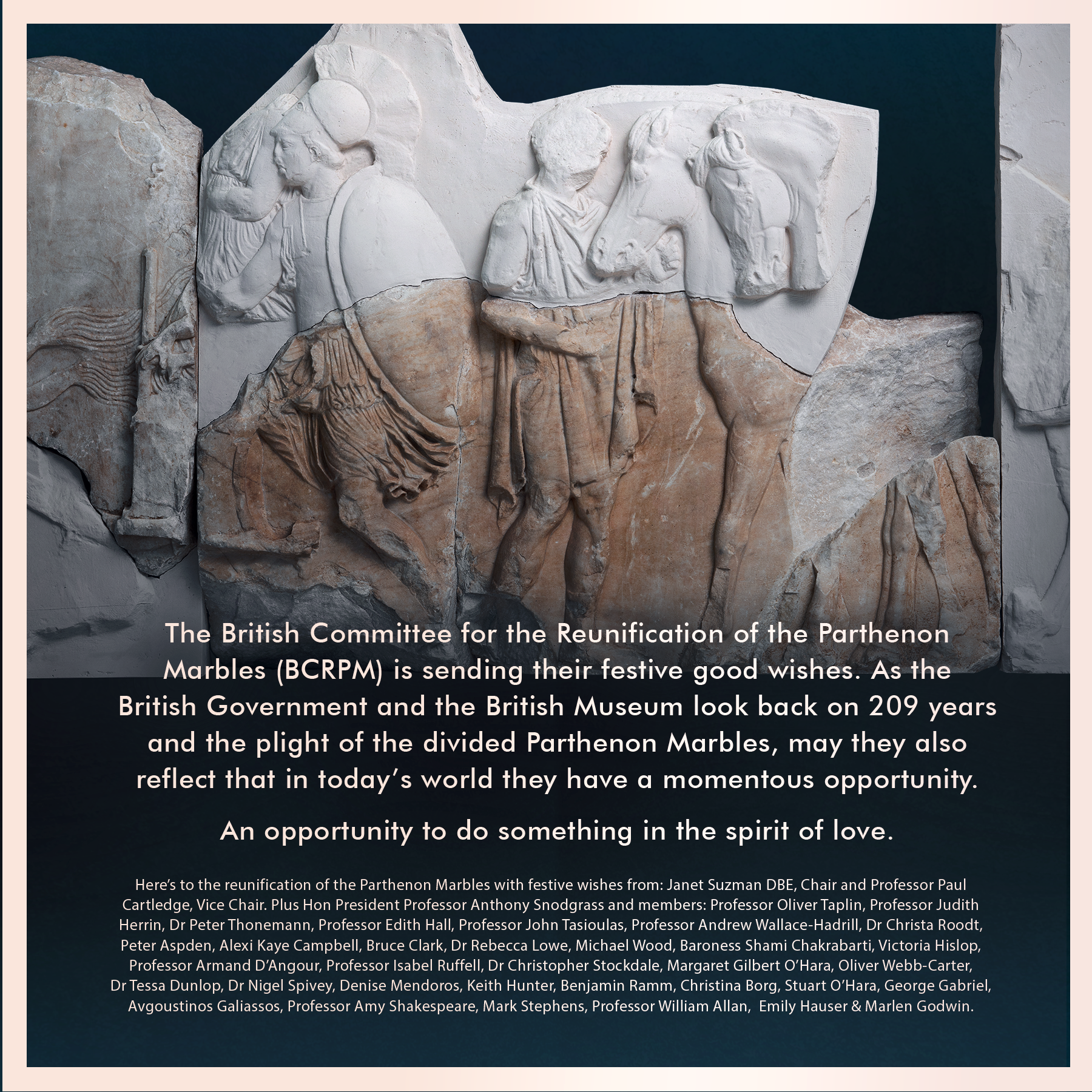
Victoria Hislop, BCRPM member asks: Are the Parthenon Marbles really safe at the British Museum?
Professor Paul Cartledge, Vice-Chair of BCRPM: “The very name’s a disgrace – the British Museum ‘Pink Ball’ fundraiser held on Saturday 18 October 2025. No one doubts that the Government’s grant to the B.M. is – as always – inadequate and that the Museum is in desperate need of massive external philanthropy, especially for its projected re-hang of the entire West Range (within which sits Gallery 18, the ‘Duveen’. But … hang on: newish and youngish Director Nicholas Cullinan, and Chair of Trustees George Osborne, really should have devised a totally other scheme than partnering with principal sponsor/organizer, Isha Ambani, in order to stage such an event. No matter how much cash they will have raised, what they have certainly achieved is to reduce the B.M. to a demeaning, anti-cultural showground staging a spectacle on the same (very low) level as the (la-la- land Oscars) Academy Museum annual gala.”
Evdoxia Lymperi, UK Correspondent for ERT (Greek Broadcasting Corporation): “As a journalist in the UK and as a Greek, I cannot overlook the profound symbolism of the Parthenon Sculptures. They are not decorative artefacts, but integral parts of the Parthenon itself — the sacred temple and international emblem of Greece. To treat them otherwise is not only a cultural misstep, but a profound misunderstanding of their identity and meaning.”
Coverage of the ball began shortly after it was announced, to read the British Museum press release follow the link here.
Museums Journal’s article on 01 October by Geraldine Kendall Adams highlighted:
Ethical concerns
However, the climate campaign group Culture Unstained said the event was evidence of the museum’s “deepening of ties to fossil fuel majors”.
The group pointed to the museum’s collaboration with Ambani, whose family owns Reliance Industries, an Indian oil, gas and petrochemical conglomerate.
“The British Museum’s decision to woo an oil and gas producer like Reliance with a billionaire ball shows just how out-of-touch it is,” said a spokesperson for Culture Unstained.
“It’s time Nick Cullinan brought the museum in line with the rest of the museums sector – and that does not come in the form of hosting a billionaire gala for climate criminals.
“Instead of a ball committee, set up an ethics committee. Instead of opening doors for billionaires, invite constructive dialogue with your staff and partners who are clamouring for accountability and for the museum to change course.”
‘Chilling effect’
Asked for comment about the museum’s partnership arrangements, a British Museum spokesman pointed to comments made by Cullinan in the Financial Times earlier this year.
In the article, Cullinan warned that campaigns against sponsorship were having a “chilling effect and will have deeply regrettable consequences if left unquestioned and unchecked”, saying that the arts were being targeted by protesters as “collateral damage in the bid to gain attention for a cause”.
“The British Museum, like our peers, benefits from a blend of government funding, the ultimate source of which is the taxpayer, and the support of philanthropic individuals and corporations,” he added.
“Both are critical to keeping our doors open and taking care of the extraordinary collection we house. We are often urged to drop corporate sponsors for a variety of reasons, but who would truly benefit from that? And what would take its place?”
If protesters and activists have no answers to such questions, Cullinan said, “then their claim to be concerned about the future of the arts and culture will ring hollow.”
Culture Unstained said in response to those comments that its opposition to certain sponsors had been wrongly characterised “as a slippery slope towards rejecting all philanthropy, which just isn’t the case”.
The group said it advocates for a “values-based approach” to sponsorship, a position it said is supported by the majority of the museum sector.