
Chilean citizen moved by Greece’s efforts to recover the Parthenon Marbles from the British Museum, has returned a fragment that was in his family’s possession.
Chilean citizen moved by Greece’s efforts to recover the Parthenon Marbles from the British Museum, has returned a fragment that was in his family’s possession.
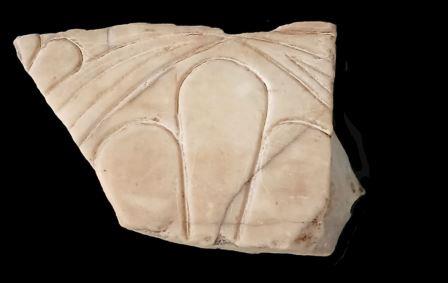
A Chilean citizen whose family reportedly acquired it in the 1930s a fragment of marble measuring 8.2 by 11.4 centimetres, was moved by Greece’s ongoing efforts to recover the Parthenon Marbles from the British Museum, he contacted the Greek Embassy in Santiago, expressing his desire to return the piece. features the upper portion of an engraved palmette motif flanked by lotus flowers and dates back to the 6th century BCE.
The article in To Vima, describes the fragment as the upper portion of an engraved palmette motif flanked by lotus flowers, dating back to the 6th century BCE.
“For Greece, the repatriation of every cultural object that has been illegally exported brings us immense joy and satisfaction,” said Minister of Culture Lina Mendoni.
Minister Mendoni emphasized the Ministry’s belief that all antiquities removed unlawfully from any country must be returned to their place of origin, to the people to whom they rightfully belong.
“The protection of cultural heritage can only be achieved through cooperation, mutual assistance, and understanding,” Mendoni added. “Respecting and promoting it is both a national responsibility and a global moral obligation.”
The artefact was handed over to the Ephorate of Antiquities of Athens, whose experts examined it and identified it as part of an archaic temple that once stood on the sacred rock of the Acropolis—likely from the Hekatompedon, a monumental structure 100 feet long, built during the reign of Pisistratus (Peisistratos) around 570–550 BCE, as referenced in ancient inscriptions.