
Latest Posts
WHY CAN’T THE BM BE MORE LIKE THIS?
WHY CAN’T THE BM BE MORE LIKE THIS?
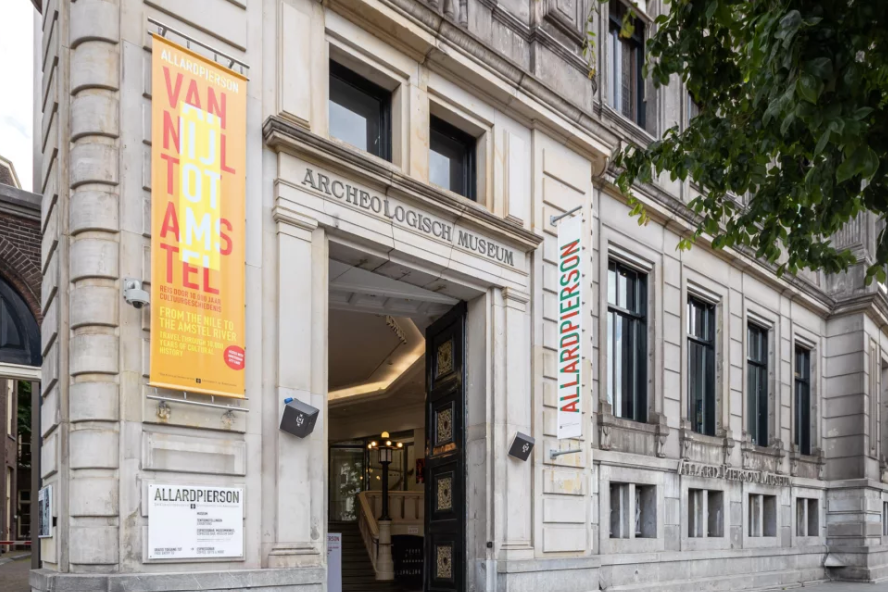
Dutch museum returns ancient vase to Sicily after research uncovers ‘problematic’ provenance – The Art Newspaper – International art news and events.
Oct 2026
Rogier Kalkers, the head of provenance research at the Allard Pierson, said the museum felt a moral duty to return the object.
The BM displays no such moral compunctions. Lord Boateng in a recent impassioned speech to Chatham House thrashes the BM for having no sense whatsoever of which cultural objects CARRY A PROFOUND MEANING TO THEIR COUNTRY OF ORIGIN, and should be returned from whence they were taken. In the BM they are merely exhibits.
AND WHY DOES THE BRITISH MUSEUM PERSIST IN FLAUNTING ITS BIAS AGAINST THE KNOWN FACTS?
N.B The Parthenon sculptures in the BM have a more than ‘problematic’ provenance: they were illegally chopped off a famous archaeological site, and then shipped without express permission, to England. When offered to the BM by a bankrupted Lord Elgin, a cursory Parliamentary debate ensued by a Select Committee in which a proper discovery of all relevant facts was only very lazily attended to, and the sculptures were then formally adopted as if they were so many orphaned children.
Under ‘common misconceptions‘ on the British Museum’s website we see this:
The Parthenon sculptures now in the British Museum were stolen
A phrase which appears to rouse the Trustees from their usual torpor to refute:
This isn’t true. Lord Elgin, the British diplomat who transported the sculptures to England, acted with the full knowledge and permission of the legal authorities of the day in both Athens and London. Lord Elgin’s activities were thoroughly investigated by a Parliamentary Select Committee in 1816 and found to be entirely legal. Following a vote of Parliament, the British Museum was allocated funds to acquire the collection.
But IT IS TRUE. The ‘full knowledge and permission of the legal authorities of the day in Athens’ have never been discovered.
Let us remind ourselves of the statement made in UNESCO only last year:
At the 25th session of UNESCO’s Intergovernmental Committee for Promoting the Return of Cultural Property to its Countries of Origin or its Restitution in Case of Illicit Appropriation (ICPRCP), held in Paris 20-22 May 2026, Türkiye’s representative, Zeynep Boz, respectfully asked the UK delegation to stop referring to such permission.
Zeynep Boz, the Türkiye delegate to UNESCO’s ICPRCP had already, two years ago stated that there is no firman. This year Zeynep went a stage further adding, in her comments: “About the permit given to Lord Elgin by the Ottoman authorities, I believe that two years ago, around these dates Türkiye was making this point one more time and confirming that this so-called firman, does not exist. I cannot believe that it can be a reference any more in such a kind of intergovernmental fora, that is why we very kindly and with all our respect request the UK delegation to omit making this reference, as there is no single evidence that document exists or gives permission. That being said, we strongly support our Greek colleagues and their claim and we are hoping to celebrate the return of the Parthenon Sculptures to Greece all together.”
In solidarity with UNESCO, the BCRPM also offers this scholastically sound refutation made by esteemed BCRPM Member Dr Christa Roodt (Senior Lecturer in History of Art at the School of Culture and Creative Arts, University of Glasgow).

I would like to add that neither Elgin’s nor Hunt’s testimony before the Parliamentary Committee resolved the discrepancies and gaps in the narrative about the lawfulness of the removal of the Parthenon Sculptures from Athens. I also consider it important that the Select Committee of Parliament did not discuss whether the occupying power had the legal capacity to agree to the Marbles’ removal. It made no effort to obtain the document from Ottoman officials in Athens and it did not communicate with Ottoman officials in Constantinople. I include more detail below in case it is useful.
- Personal ambition left the Parthenon stripped and damaged, yet Lord Elgin blamed the Ottoman government’s reluctance to accede to his requests on their religious intolerance and hostility towards Christians (Report from the Select Committee of the House of Commons on the Earl of Elgin’s Collection of Sculptured Marbles (HC Report) 1816: 39; Roodt, Restitution of Cultural Property and the Law: Complex Colonial Histories (2025 Routledge) p. 108). Willing to blur boundaries in his testimony before the Parliamentary Committee, Lord Elgin insisted that he had permission to ‘draw, model, remove and excavate.’ The Select Committee queried the word order. Permission to ‘excavate and remove’ would carry a very different meaning (HC Report 1816: 35–36; Roodt, Restitution of Cultural Property and the Law p. 128).
- The shrewd clergyman Reverend Philip Hunt, Lord Elgin’s chaplain and secretary between 1801 and 1802, confided in his father his deep desire to amass a ‘splendid’ and ‘independent’ fortune (Stockdale 2023: 32). Hunt testified that he insisted on a literal translation of a permission that had already been given and that he had this permission in his possession, but also disclosed that he never saw a translation of this letter and could not produce it (HC Report 1816: 143). His excuse was that he had left it in Bedford but testified that the Porte had granted ‘the most extensive permission to view, draw, and model the ancient temples of the idols and the sculptures upon them, and to make excavations, and to take away any stones that might appear interesting to them’ (HC Report 1816: 141). Hunt subsequently provided an English translation for the Parliamentary Report, which reads: ‘when they wish to take away some pieces of stone (qualche pezzi di pietra’) with old inscriptions, or figures thereon, that no opposition be made thereto.’ Rigorous trawling of the Ottoman archives in recent years has not yielded the original Ottoman document (Roodt, Restitution of Cultural Property and the Law (2025) p. 10. Türkiye denied its existence (Helena Smith, ‘Türkiye rejects claim Lord Elgin had permission to take Parthenon marbles’ The Guardian, 7 June 2024).
- The Select Committee of Parliament did not discuss whether the occupying power had the legal capacity to agree to the Marbles’ removal. It made no effort to obtain the document from Ottoman officials in Athens and it did not communicate with Ottoman officials in Constantinople. The Committee did ask Lord Elgin if he had disclosed his intention to establish a private museum to the Ottoman government (HC Report 1816: 49). Elgin insisted that he only expanded the scope of his project when it became clear to him that the unique treasures were in danger (HC Report 1816: 40–41). The version delivered by the Earl of Aberdeen was that, had Lord Elgin not ‘secured’ the Parthenon Sculptures, the French might have removed them (HC Report 1816: 7, 124). Elgin swore that he had not been actuated by ‘motives of private emolument.’ Privately, however, his desire for personal and familial aggrandisement and glory was confirmed in a letter he wrote to Lusieri in 1801, stating that he wanted to collect as much marble as possible for his ancestral home and to multiply the marble ornaments decorating ‘Broomhall House.’ Basically, the 1816 Act vesting title in the Trustees of the British Museum, would be a state sanctioning improper acquisition and the abuse of rights to gain ownership over culture within Europe (Stahn 2023: 118). If the British Museum did not acquire title, the Trustees would be competent to return them (Roodt, Restitution of Cultural Property and the Law (2025) p. 128).