
Two books by Dr Christa Roodt on Law and the Restitution of Cultural Property: Complex colonial Histories
Two books by Dr Christa Roodt on Law and the Restitution of Cultural Property: Complex colonial Histories
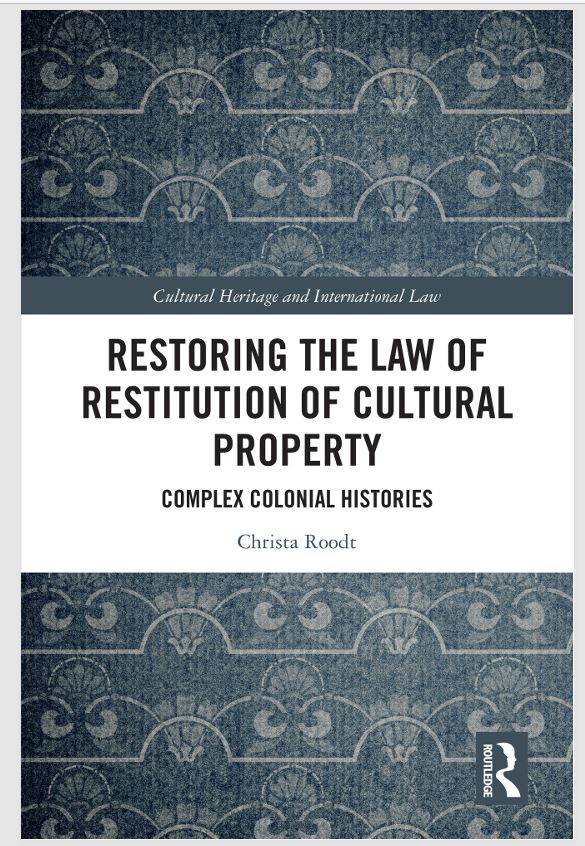
Restoring the Law of Restitution of Cultural Property
This ground-breaking book by Dr Christa Roodt covers the restoration of the law of restitution of cultural property, matching the time, space, and depth dimensions of the law with the time, space, and ontology of events that violated persons and desecrated their heritage in the colonial era.
Using the contested ownership of the Parthenon Sculptures and the Zhanggong Zushi mummy encased in a Buddha statue as the main points of orientation, the book shows how the law of restitution could be ‘defragmented’ and ‘restored’ in respect of claims for the return of colonial-era and Indigenous cultural property disputes.
The study argues that the secondary legal norms and common arguments of private international law can unlock governance functions and strategies that counter the effects of the narrow definition of the ‘sacred’ and the consistent refusal to consider an alternative chronosophy in restitution claims. When called upon to resist the detrimental effects and mimetic dynamic in restitution in complex colonial contexts, the law stands to benefit from a legal-theoretical perspective that views law in relation to ethics and considers private international law, a model of ethics.
The book will be of interest to researchers in the field of cultural property law, heritage studies, indigenous law, provenance, and applied ethics.
Restitution of Cultural Property and the Law
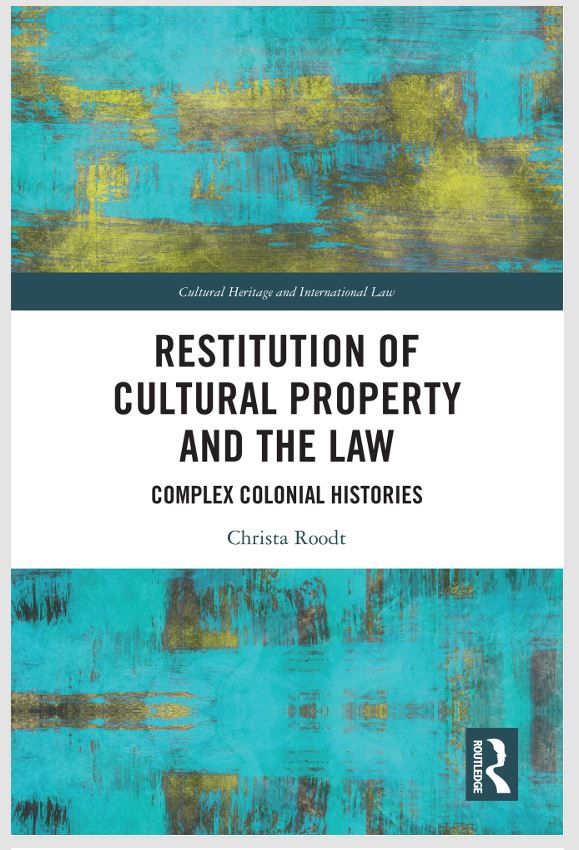
This book by Dr Christa Roodt adopts a novel approach to the social question of restitution and repatriation of sacred cultural property and heritage acquired unethically during the colonial era. It uses an approach premised on better integration of law, ethics, history, anthropology, and provenance research.
To bridge the material and the sacred world in adjudication and policy formulation, a common definition of what the ‘sacred’ denotes in the context of colonial legacies is adopted as a viable methodology. ‘Sacred’ loot in private and public collections is defined based on clues imparted by disputes which are paradigmatic of the fragmentation that envelops the material, the systems of knowledge associated with that material, the structure and method of international law, subject specialisations, and the legal frameworks in play. The book suggests that the Parthenon Sculptures dispute and the parallel transnational litigation in the Zhanggong Zushi Statue cases offer practical approaches for deconstructing hurdles and assumptions concerning historical claims in the secondary legal norms and tenets of PrIL.
It will be of interest to researchers interested in interdisciplinary work across the humanities and social sciences, including public and private international law, cultural property law, heritage law, and provenance research and practice.