
Ten Essential Objects to See at the British Museum, Eleanor Mills writes in ARTnews
Ten Essential Objects to See at the British Museum, Eleanor Mills writes in ARTnews
The Parthenon Marbles were first put on display at the British Museum in 1817, and for now they remain a fixture there. The recently appointed director of the museum, Nicholas Cullinan, has firmly ruled out any permanent restitution of artifacts during his tenure.
– Eleanor Mills, ARTnews
‘The British Museum, the world’s first free-to-the-public national museum, opened its doors in 1759. Founded in 1753 by an act of Parliament, after the physician and collector Hans Sloane bequeathed his collection to the nation, the museum immediately had a base of 71,000 items to oversee.
From its beginnings as Sloane’s “cabinet of curiosities,” the British Museum has grown in size, scope, and reputation over the past 266 years. Xerxes Mazda, the recently appointed director of collections, is now steward of some eight million objects. Here are ten that shouldn’t be missed on your visit.’ Writes Eleanor Mills for ARTnews.
Parthenon Marbles, 447–432 B.C.
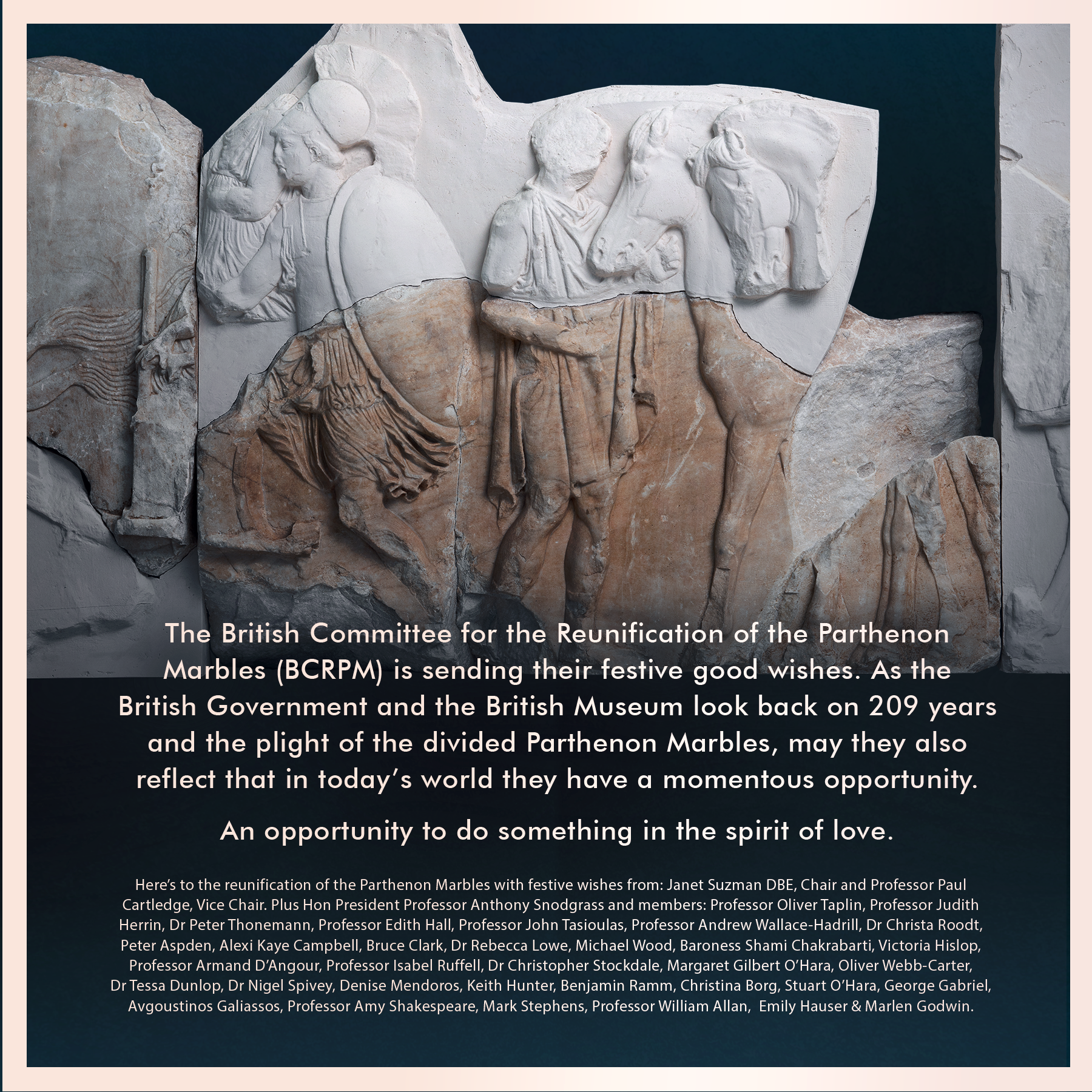
Where to start? One of the most contested artworks in the world, the Parthenon Marbles used to adorn the pediment of the eponymous Athens temple devoted to Athena, the Greek goddess of wisdom and warfare. Indeed, the Parthenon was originally built to celebrate a hard-fought victory over the Persians, and this was the ancient Greeks’ big thank-you. The long marble frieze held by the British Museum shows the procession of the Panathenaic festival, the commemoration of the birthday of Athena.
Notoriously ordered to be chipped off the Parthenon by the Scottish diplomat Thomas Bruce, the British ambassador to the Ottoman Empire and the Seventh Earl of Elgin, the marbles caused a stir right from the start. The ship that was to haul them to England was wrecked within a day of leaving port in 1803, and it took three years to raise the funds for the marbles to be recovered by divers. The original cost of the marbles’ removal had been close to £75,000 (now £5.7 million), and Lord Elgin hoped to make that back by selling them to the British government. He finally did so, in 1816, but his take was much lower, just £35,000. And it is still disputed whether the Ottoman sultan actually granted him permission to remove them in the first place.
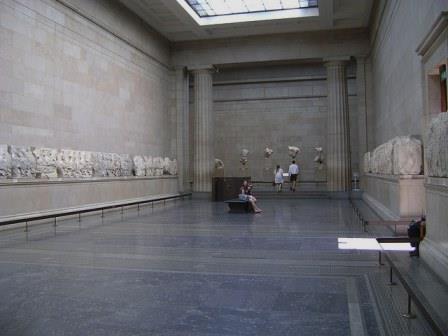
And the debate rages on. The Parthenon Marbles were first put on display at the British Museum in 1817, and for now they remain a fixture there. The recently appointed director of the museum, Nicholas Cullinan, has firmly ruled out any permanent restitution of artifacts during his tenure.
On display, Room 18