
Latest Posts
Remembering historian and supporter of the reunification of the Parthenon Marbles,Hélène Glykatzi-Ahrweiler
Remembering historian and supporter of the reunification of the Parthenon Marbles,Hélène Glykatzi-Ahrweiler
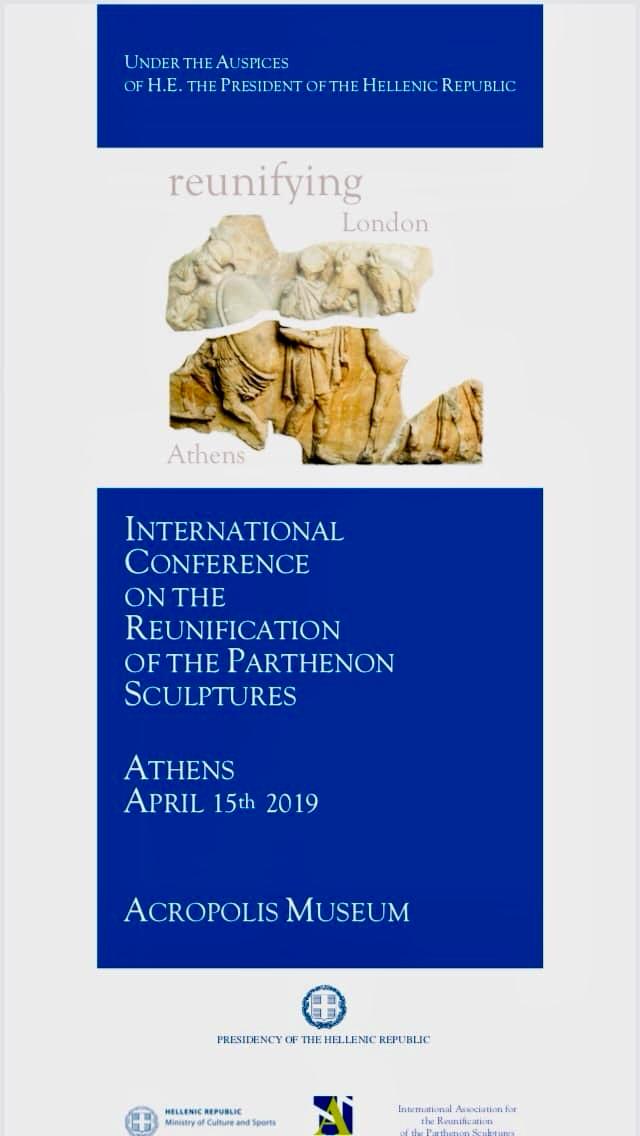
The last time that BCRPM’s Chair Janet Suzman and Vice-Chair Professor Paul Cartledge heard Hélène Glykatzi-Ahrweiler speak was at the April 2019 International Conference supporting the reunification of the Parthenon Marbles organised by the then President of the Hellenic Republic, Prokopios Pavlopoulos with Sophia Hiniadou Cambanis, and held at the Acropolis Museum.
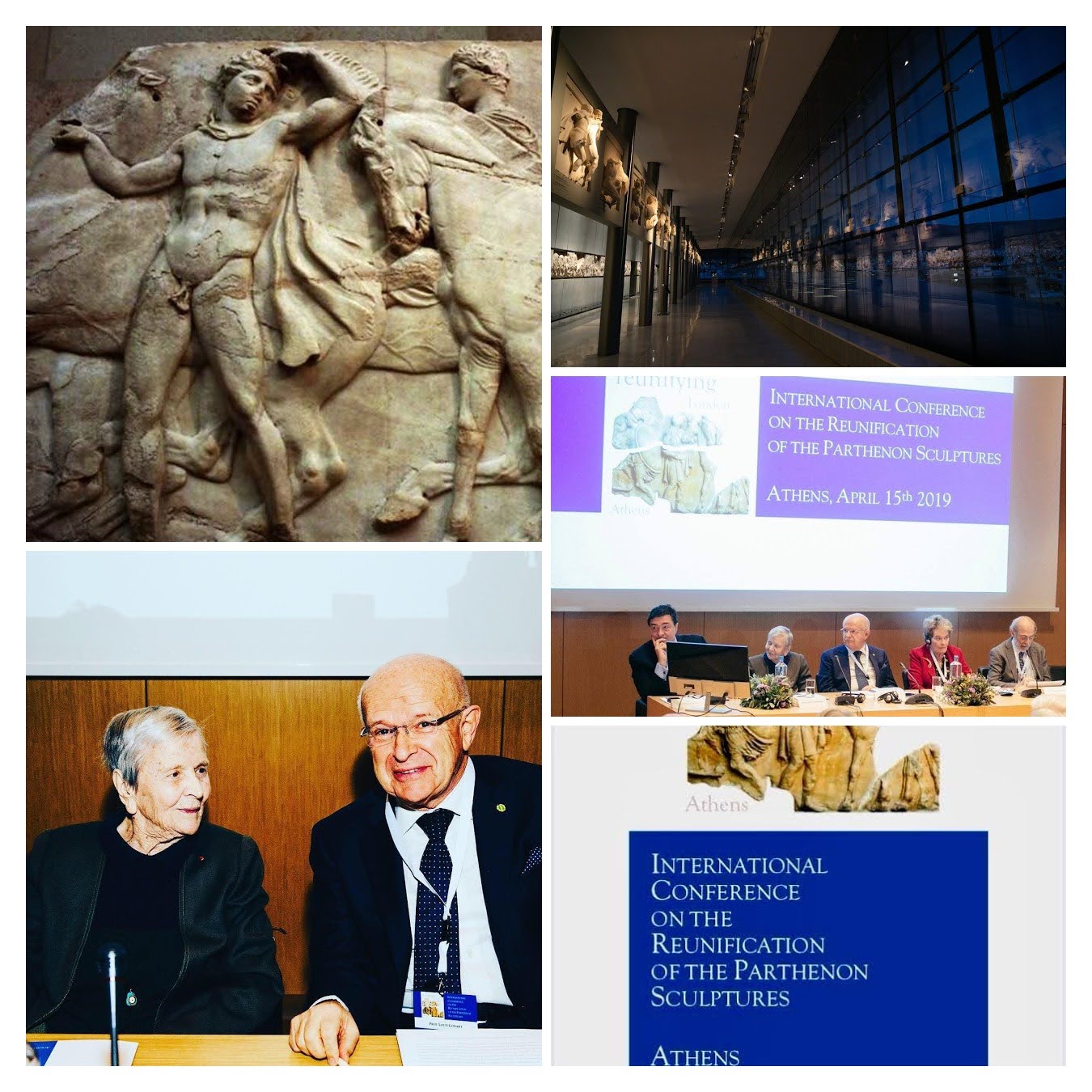
Hélène Glykatzi-Ahrweiler as President of the European Cultural Centre of Delphi presented a paper at that conference highlighting the conflict between two English scholars: James Knowles, who supported the view that the Parthenon Sculptures should remain in Britain, and Frederic Harrison, who was of the opinion that they should be returned to Greece and who created the first English movement to this effect. Also discussed were the comments by Cavafy, working as a journalist at the time, regarding this debate too.
Professor Judith Herrin, BCRPM member and Constantine Leventis Senior Research Fellow, Department of Classics, King’s College London. Judith was awarded the Duff Cooper Pol Roger Prize 2020 for Ravenna. Capital of Empire, Crucible of Europe, plus the Heineken Prize for History 2016. Below Judith pays tribute to Hélène:
Helene Ahrweiler, a long-time supporter of BCRPM, was a brilliant Byzantinist whose work on Byzantium and the sea, the Monastery of Lembiotissa (near Smyrna/Izmir), and the Political Ideology of the Byzantine Empire, remain classics in this field. She made a stunning impression at the 1966 International Congress of Byzantine Studies, held in Oxford, when I first observed her style. Addressing a huge audience in the Examination Schools, wearing a bright yellow trouser suit, she declaimed the importance of studying the geography of Byzantium. She was a star performer and created quite a stir!
Three years later I was able to enroll in her MA class in Paris, which made a significant contribution to my formation as a Byzantinist. With quite a large class, she would bring a medieval Greek text for immediate discussion, calling on individual students to translate and comment. Her presence and powerful leadership, quite scary as well as inspiring, made her a formidable role model. She rose to become Rector of the Sorbonne-Panthéon, Université de Paris 1 (1976-81) and in 1982 François Mitterrand appointed her Rector of the Academy of Paris and Chancellor of the Universities of Paris. In both posts she was the first woman and a medievalist! She never lost her accent, which identified her as unmistakably Greek and may have prevented her promotion to higher intellectual positions. Instead, Paul Lemerle, then leader of the French Byzantinists, selected a scholar with impeccable Parisian tones.
And she returned to Greece to become more famous in additional ways, as well as continuing to work on Byzantium, for instance, Studies on the Internal Diaspora of the Byzantine Empire (1998), written in collaboration with Angeliki Laiou, another Greek scholar who made a hugely successful career in the United States, and Γιατι το Βυζαντιο (2009). She believed that Byzantium was a multiethnic and multicultural state, unified by its solid institutions as well as beliefs, and that it sustained a vital position in the development of Europe, as her contributions on The Making of Europe and Les Européens make clear. I share these views and salute her outstanding achievements. Αιωνια της η μνημη.
Sophia Hiniadou Cambanis, attorney of law, cultural policy and management advisor to the Hellenic Parliament, added her thoughts too:
Her intellectual compass, emanating from deep knowledge and universality, remained steadfastly oriented toward Greece. Eleni Glykatzi-Ahrweiler stood as a luminous landmark of openness and wisdom for us all.
I cherish as a precious legacy our collaboration in the quest for the reunification of the Parthenon Marbles. For Eleni Ahrweiler, this demand was not merely a national pursuit, but an act of justice for the integrity of a universal monument—a monument scarred by time, history, and human callousness , as well as by the ignorance of its priceless symbolic value for civilization and humanity.
It is our duty to honour her vision of a culture that unites and elevates the human spirit. May her journey toward the light be eternal.
Tom Flynn also paid tribute, as the Acropolis Museum circulated their memories with a photo from 2022. Tom met Dr Glykatzi-Ahrweiler when he gave the keynote speech in the Parthenon Galleries of the Acropolis Museum in March 22 at the event, titled “The Expatriate Goddesses of the Parthenon”, organised in collaboration with the Marianna V. Vardinoyannis Foundation.
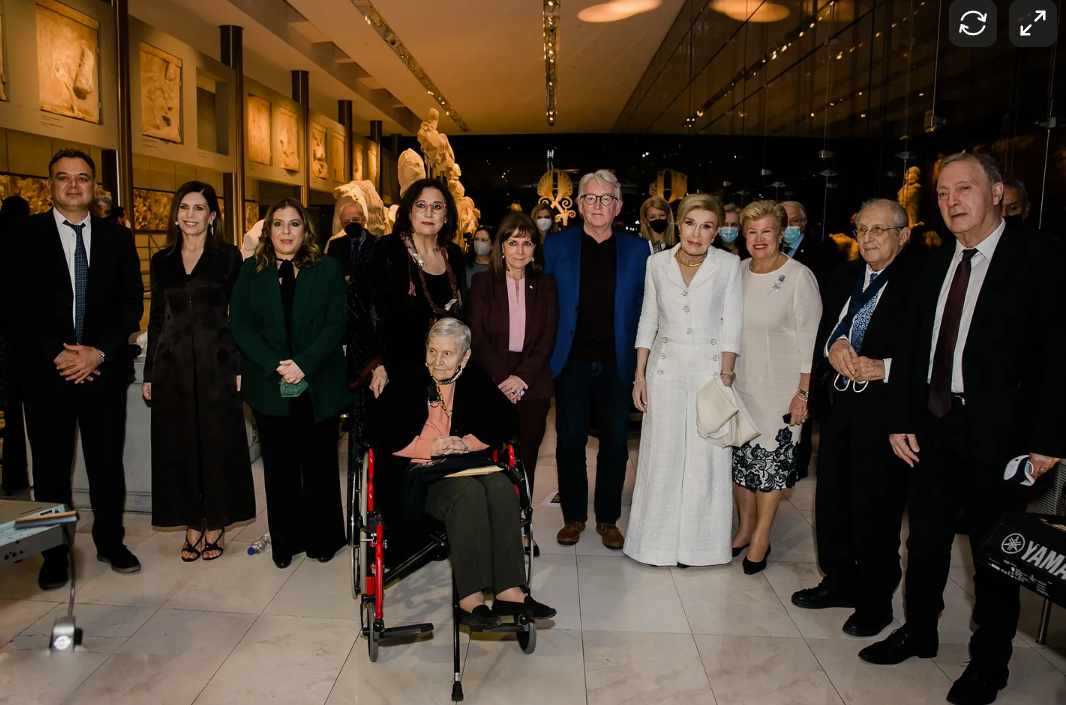
from left to right: The Secretary General of Culture, Mr. Giorgos Didaskalou, the actress Mrs. Katerina Didaskalou, MP Mrs. Maria Syrengela, Mrs. Maria Farantouri, the former President of the Republic Mrs. Katerina Sakellaropoulou, the late Hélène Glykatzi-Ahrweiler, the historian artist Dr. Tom Flynn, the late UNESCO Goodwill Ambassador Marianna V. Vardinoyannis, the former First Lady of Cyprus Mrs. Andri Anastasiades, the late President of the Acropolis Museum, Professor Dimitris Pandermalis, the General Director of the Acropolis Museum, Professor Nikolaos Chr. Stampolidis
Photo credit: STUDIO PANOULIS