
Latest Posts
UNESCO’S ICPRCP 25th Session, 20 countries urge the UK to find the political and ethical courage to reunite the Parthenon Marbles
UNESCO’S ICPRCP 25th Session, 20 countries urge the UK to find the political and ethical courage to reunite the Parthenon Marbles

We’ve sat and listened to the UNESCO ICPRCP sessions over a number of years.
We were privileged to hear Artemis Papathanassiou in June 2016 at our 200 commemorative event at Senate House outlining Greece’s valiant efforts at UNESCO’s ICPRCP, to find a holistic and sustainable solution to the continued plight of the Parthenon Marbles: Requesting the return of the Parthenon Sculptures through alternative means of dispute resolution, the course of a recent request for mediation.
We were on occasion stunned by some of the presentation references made by the UK delegation and yet always rewarded by the number of nations speaking out to support Greece’s efforts to highlight the ethical, cultural and historical imperative, for the reunification of the Parthenon Marbles. A globally supported cause for the protection of an emblematic cultural property.
The Greek delegation has at all times done their utmost to break down the arguments that are curtailing any meaningful progress to this cultural impasse.
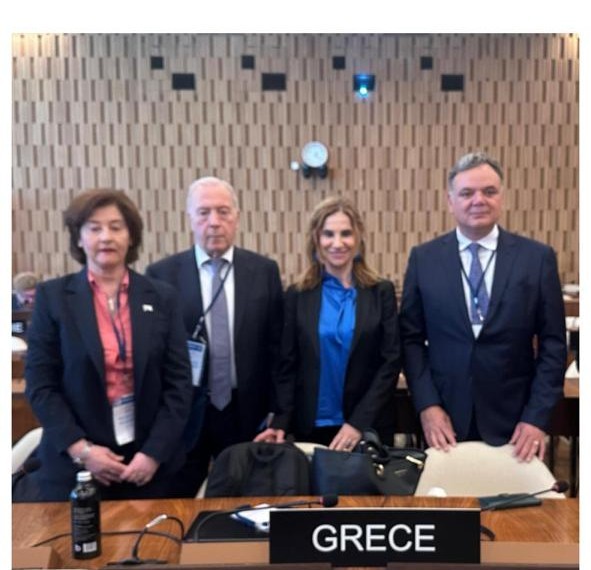
The Greek delegation from left to right: Vassiliki Papageorgiou, Director of the Department for Documentation and Protection of Cultural Property, Culture Ministry, Nikos Stampolidis, Director of the Acropolis Museum, Artemis Papathanassiou, Head of the Special Legal Service of the Ministry of Foreign Affairs and Georgios Didaskalou, Secretary General of the Culture Ministry. This year’s delegation was also supported by the Permanent Delegation of Greece to UNESCO.
That some things have changed rests with the British Museum talking to Greece over these last three plus years. However, the talks have been carefully orchestrated to promote a ‘Parthenon partnership‘, a way forward only available to the British Museum, that of a loan to Greece, without employing the word loan.
Confused?
The idea that a loan of substantial marble, and millennia old, classical sculptures travelling back and forth every three years between London and Athens, is both unsustainable and impractical.
During the 25th session, Ruth Hannah, Director General of the DCMS representative, and Dr Rosie Weetch, Head of International and National Partnerships at the British Museum, gave the usual one note address. The British Museum is independent of the British government and yet governed by UK law and loans are the only mechanism available to the museum. The UK government is not considering amending the law.
The UK Government implemented a change in law to the Charities Act 2022 to make it easier for museums in England and Wales to restitute objects from their collections on moral grounds. Artemis Papathanassiou mentioned during her presentation for Greece that the UK government had recently ringfenced sixteen museums from the Charities Act that includes the British Museum.
The Acropolis Museum opened in June 2009 and offers a global audience the once in a lifetime opportunity to see the surviving sculptures, reunited, with direct views of the Parthenon, which still stands and crowns the city of Athens. So what’s the big issue with having them divided? Apart from geography, well, simply nonsense.
The firman, an Ottoman official document that would have given Lord Elgin permission to remove integral, sculpted parts of the Parthenon and ship them to the UK, exists as an Italian letter. The British Museum references this letter and adds that Lord Elgin openly and over many months, with full knowledge of the Ottoman authorities in Athens, took what visitors to London can see in the British Museum’s Room 18 . This reference is in the section entitled ‘True or False’ from the British Museum’s current flyer:
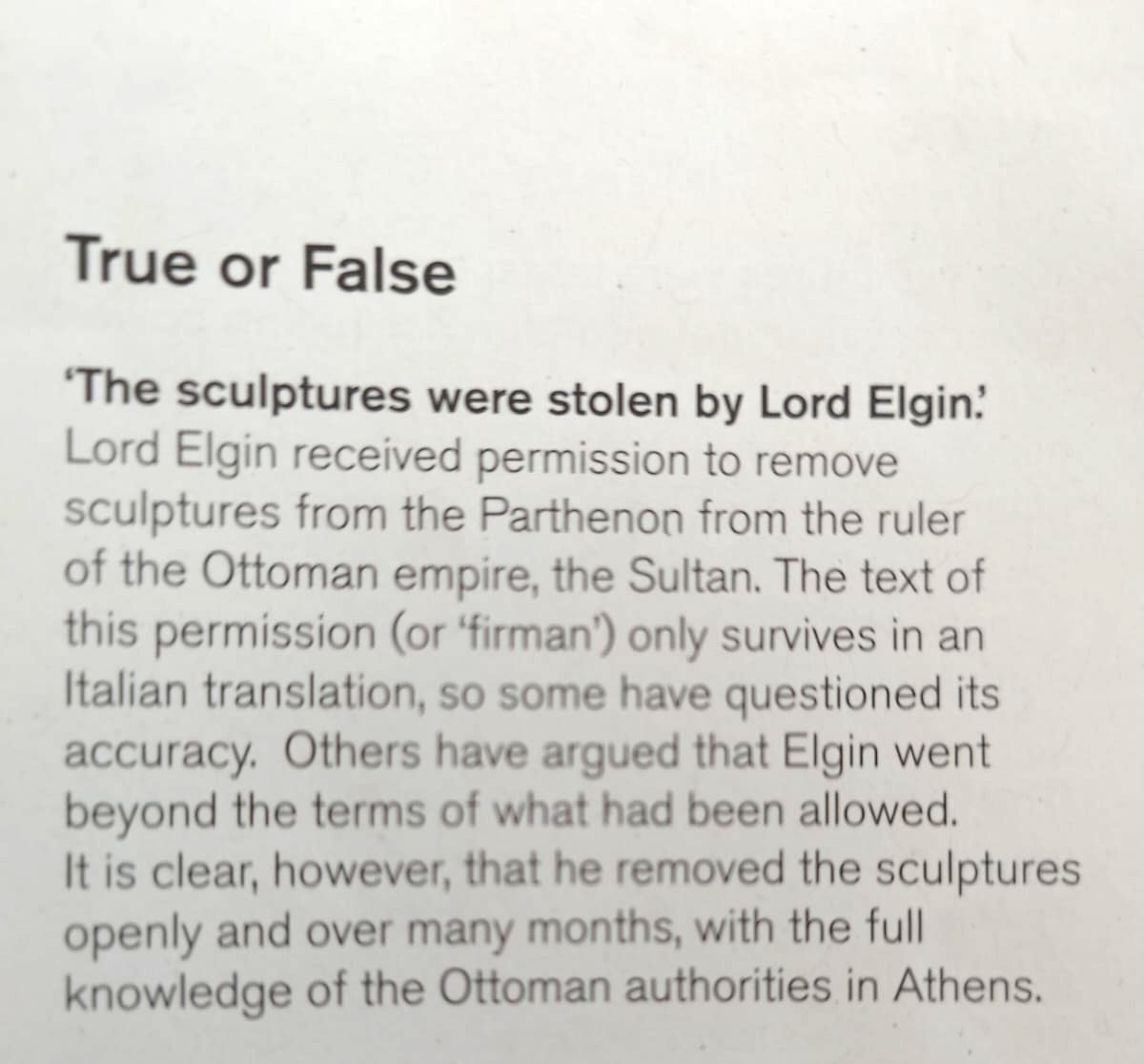
Zeynep Boz, the Türkiye delegate to UNESCO’s ICPRCP had already, two years ago stated that there is no firman. This year Zeynep went a stage further adding, in her comments: “About the permit given to Lord Elgin by the Ottoman authorities, I believe that two years ago, around these dates Türkiye was making this point one more time and confirming that this so-called firman, does not exist. I cannot believe that it can be a reference any more in such a kind of intergovernmental fora, that is why we very kindly and with all our respect request the UK delegation to omit making this reference, as there is no single evidence that document exists or gives permission. That being said, we strongly support our Greek colleagues and their claim and we are hoping to celebrate the return of the Parthenon Sculptures to Greece all together.”
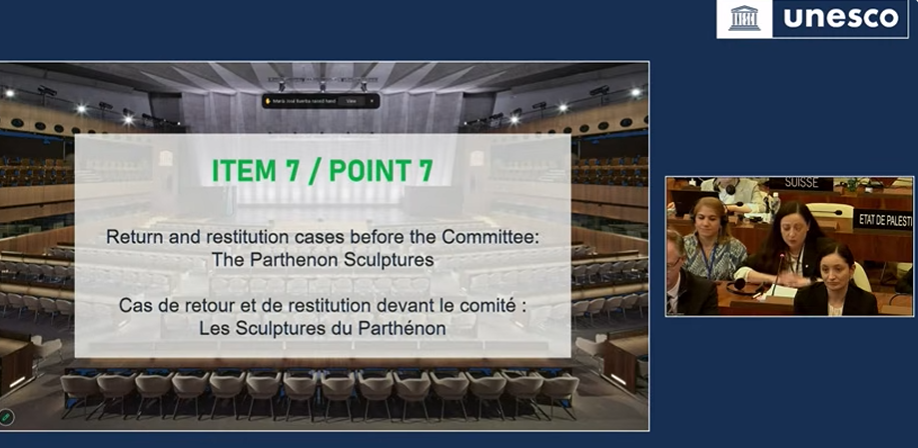
More about the presentations by both Greece and the UK on another post but for now, let us reflect on Zeynep’s words those of Artemis Papathanassiou also from two years ago.
We are grateful to Zeynep and Artemis for their contribution to the campaign, who have been steadfast in their support and commitment to present what needs to be heard.
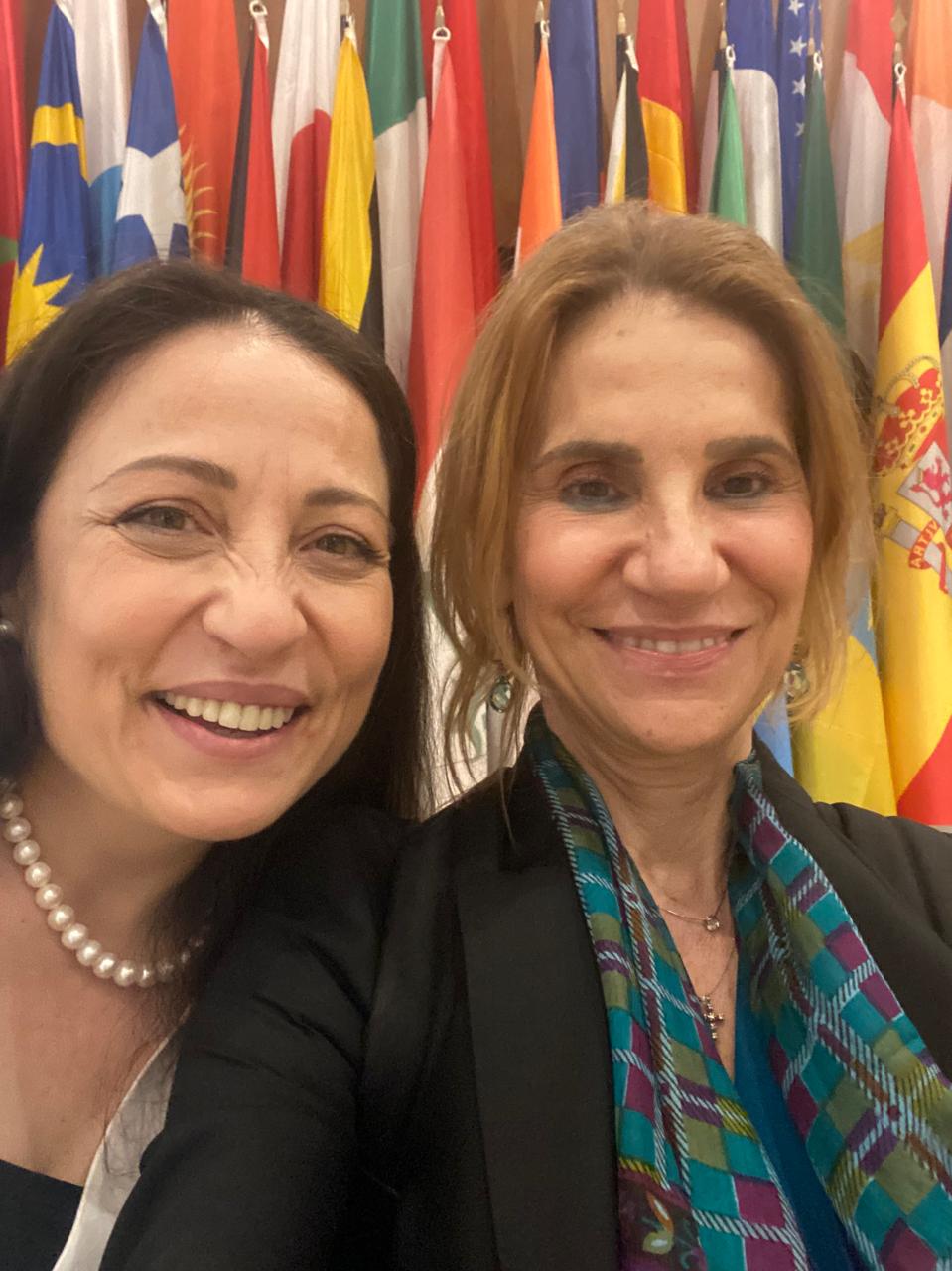
Zeynep Boz, the Türkiye delegate to UNESCO’s ICPRCP and Artemis Papathanassiou, Head of the Special Legal Service of the Ministry of Foreign Affairs, Greece
We sincerely hope that the UK will (soon) find the political courage to fully appreciate and understand the ethical foundation for this long standing request by the Greeks and their Government.
Those sculptures, torn from a building that was created over two and half millennia ago, deserve our collective respect. That collective respect urges, in the name of humanity, for the surviving sculptures to be reunited (with their connecting halves) in the glass walled Parthenon Gallery.
ekathimerini: The UNESCO session saw twenty countries back the return of the Parthenon Marbles. Twenty nations across all geographic blocs voiced support at UNESCO’s ICPRCP 25th session in Paris, for the reunification of the Parthenon Sculptures.
Protothema article by Anastasia Kouka: “The majority of States participating in the 25th Session of the Intergovernmental Committee of UNESCO concluded its work and expressed their full support for Greece’s request for the reunification of the Parthenon Sculptures. Among them was Türkiye, which participated as an observer State and once again rejected the British request, boldly stating that there is no document issued by the Ottoman empire, the Sultan, the firman that would legitimize the removal of the Sculptures from the monument and their acquisition by Lord Elgin.”
iefimerida: “At the 25th session of UNESCO’s ICPRCP, Greece called on the United Kingdom to demonstrate in practice its will to comply with the committee’s recommendations and decisions.”
Greek Reporter: The Intergovernmental Committee of UNESCO has issued a formal call to intensify efforts for the reunification of the Parthenon Marbles. Concluding its session on Friday, 22 May 2026, the committee’s decision marks a highly positive development for Athens’ long-standing diplomatic goals.