
Latest Posts
BCRPM’s warm welcome to new Prime Minister, Andy Burnham
BCRPM’s warm welcome to new Prime Minister, Andy Burnham
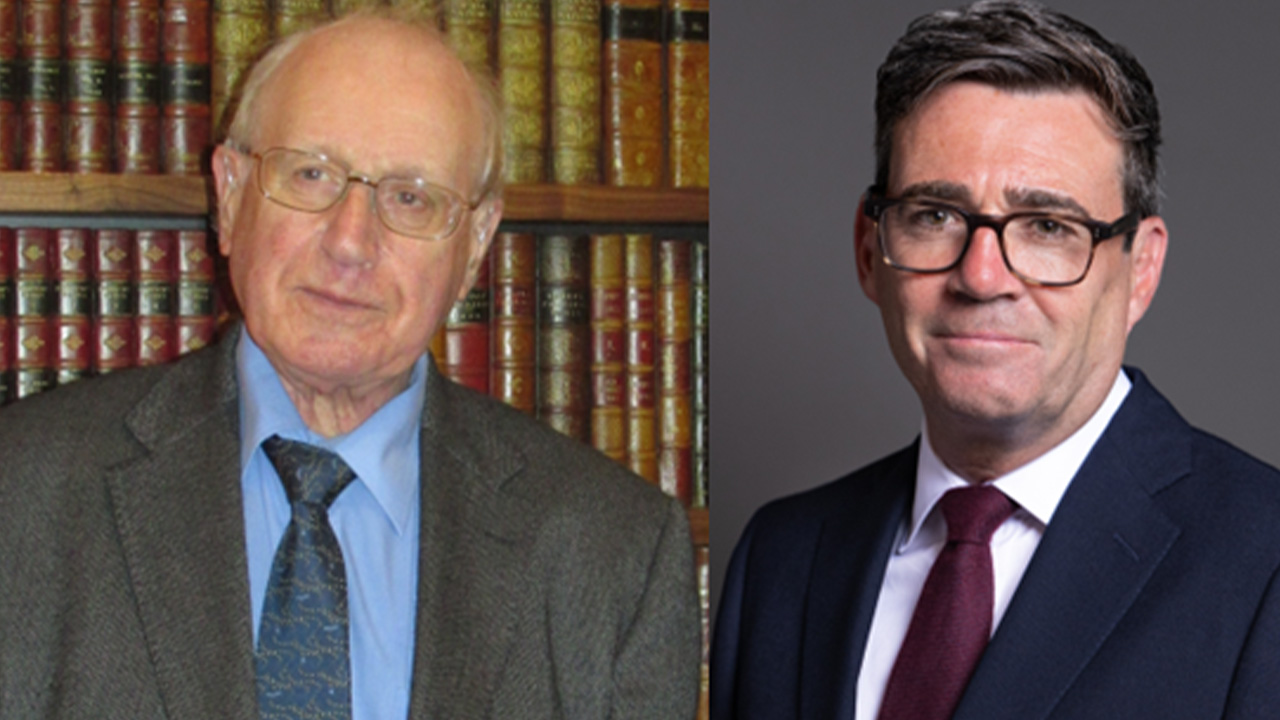
Janet Suzman, Chair, Professor Paul Cartledge, Vice-Chair and the 32 members of the British Committee for the Reunification of the Parthenon Marbles (BCRPM) add their warm welcome to the UK’s new Prime Minister, Andy Burnham.
BCRPM were delighted to read the article in Ta Nea (18.07.2026) by Yannis Andritsopoulos, a comprehensive review of Andy Burnham’s public record highlighting his consistency and conviction about the Parthenon Marbles.
The Greek daily newspaper’s article reveals a “consistent pattern of interventions, from Andy Burnham’s sponsorship and support of parliamentary motions and Private Members’ Bills shortly after entering the House of Commons in 2001, through his time as Culture Secretary, to public statements as Mayor of Greater Manchester urging Britain to return the ancient sculptures without demanding anything in exchange.”
The Ta Nea article headline asks: ‘Will Britain’s next Prime Minister become Greece’s strongest ally yet in Downing Street?’
BCRPM sincerely hopes so and wishes that Eddie O’Hara were alive to witness Andy’s time as Labour PM.
“On 7 March 2020, while serving as Mayor of Greater Manchester, Andy Burnham paid tribute to the late Labour MP Eddie O’Hara, former chairman of the British Committee for the Reunification of the Parthenon Marbles, writing on Twitter (now X) that O’Hara had “persuaded me” to support the return of the Parthenon Marbles.” Writes Andritsopoulos in Ta Nea.
Read the full Ta Nea article in English here too, we’ve included a section below.
Less well known is the fact that the newly elected Labour leader is about to make history: he will become the first serving British Prime Minister to have repeatedly and publicly backed the return of the Parthenon Marbles to Greece — including an unequivocal call r their reunification “with no strings attached”.
Although Burnham’s support for Greece’s long-standing claim has been expressed over a period of nearly 25 years, it has attracted remarkably little attention.
A review of his public record by the Greek daily newspaper Ta Nea reveals a strikingly consistent pattern of interventions, from his sponsorship and support of parliamentary motions and Private Members’ Bills shortly after entering the House of Commons in 2001, through his time as Culture Secretary, to public statements as Mayor of Greater Manchester urging Britain to return the ancient sculptures without demanding anything in exchange.
Whether Burnham will seek to translate those views into government policy remains an open question. Successive British governments have maintained that the future of the Parthenon Marbles is a matter for the British Museum. But his long and unequivocal record makes him potentially the most sympathetic occupant of Downing Street Greece has ever faced on one of its most enduring cultural claims.
A Greek official familiar with the issue told Ta Nea that Burnham’s previous interventions “give cause for optimism that the new British government may take a different approach to the issue. For the first time, a British Prime Minister has been shown to support the reunification of the sculptures.”
A supporter from the very beginning
In 1998, Burnham became a special adviser to Culture Secretary Chris Smith, remaining at the Department for Culture until he was elected Labour MP for Leigh in June 2001.
Only four months after entering the House of Commons, he publicly aligned himself with Greece’s request.
On 31 October 2001, Burnham signed an Early Day Motion entitled “Parthenon Marbles and the Acropolis Museum.” Early Day Motions (EDMs) are formal motions submitted by MPs primarily to draw parliamentary attention to an issue rather than to trigger a debate.
The motion called on Tony Blair’s government “immediately to enter into discussions with the Greek Government with the purpose of returning the Parthenon Marbles to Athens for display in their gallery in the Acropolis Museum when it is opened.”
Burnham soon went a step further. On 5 February 2002, he was one of seven MPs to introduce a Private Member’s Bill entitled “Museums Bill”. The proposed legislation sought to facilitate international cooperation and the exchange of cultural objects between museums. Crucially, it also proposed amending the British Museum Act 1963, which prevents the British Museum from permanently transferring the Parthenon Sculptures. The Bill, however, did not proceed further.
Burnham did not stop there. On 16 July 2002, he became one of the six sponsoring MPs of another Early Day Motion, “Sculptures of the Parthenon.” The motion urged the British Government “to begin preparations now, in partnership with the Greek Government, for the transfer of the sculptures to Athens for display in the Acropolis Museum.”
Just four months later, on 13 November 2002, Burnham again appeared among the six sponsors of a third parliamentary motion, “Return of Parthenon Sculptures to Greece.” This time MPs called on the government “to enter into meaningful discussions with the Greek Government for the return of the Parthenon sculptures to Greece.”
His parliamentary efforts continued the following year. On 16 July 2003, Burnham was again among seven MPs introducing a Private Member’s Bill, this time entitled “Museums and Galleries Bill”. The proposed legislation sought to facilitate agreements relating to the return of cultural objects, including masterpieces such as the Parthenon Marbles, by allowing for the transfer of ownership of disputed objects to claimants. Like its predecessor, however, the Bill did not proceed further.
Taken together, the three Early Day Motions and two Private Members’ Bills show that Burnham consistently supported Greece’s position from the earliest stages of his parliamentary career, at a time when such views remained far from mainstream in Westminster.
Burnham later found himself in the government department most closely associated with the issue. He served as Culture Secretary under Gordon Brown between January 2008 and June 2009, before moving to the Department of Health.
According to a Greek source, during a meeting between Greek and British officials in April 2009, Burnham expressed his willingness to work with Athens to find a solution to the Parthenon Marbles issue. However, just six weeks later, a cabinet reshuffle moved him from the Culture brief to Health, cutting short what the source regarded as the most promising ministerial engagement with the issue in years.
“Now is the time to return the Marbles”
Burnham has repeatedly reaffirmed his position since leaving Westminster front-line politics.
On 7 March 2020, while serving as Mayor of Greater Manchester, he paid tribute to the late Labour MP Eddie O’Hara, former chairman of the British Committee for the Reunification of the Parthenon Marbles, writing on Twitter (now X) that O’Hara had “persuaded me” to support the return of the Parthenon Marbles.
Burnham added: “Given Britain’s changed position in the world, now is the time to return the Marbles. And we should do it in Eddie’s memory!”
With this remark, Burnham appeared to link Britain’s post-Brexit international identity with returning the ancient sculptures, presenting restitution as an opportunity for Britain to enhance its global reputation.
“Send them back, no strings attached”
Burnham’s strongest intervention came three years later. On 16 February 2023, during the reopening of Manchester Museum, he was asked about the Parthenon Marbles following comments made that same morning by British Museum chair George Osborne on BBC Radio 4’s Today programme confirming that he was pursuing a “hybrid” agreement with Greece.
Burnham’s answer was brief but unequivocal: “Yes, George Osborne should give the Elgin Marbles back.”
The following day he strengthened his position even further. Responding on Twitter to a journalist who argued that Burnham’s remarks suggested a future Labour government might facilitate the sculptures’ full return to Greece, Burnham wrote: “Send them back, no strings (attached). And let’s use culture to change how Britain is seen around the world.”
By calling for the masterpieces of classical antiquity to be returned “no strings attached”, Burnham explicitly rejected the principle that Greece should be required to offer reciprocal loans or other concessions in exchange for their reunification.
In that respect, his position went even further than Greece’s publicly stated negotiating stance. While insisting on the permanent reunification of the Parthenon Marbles, Prime Minister Kyriakos Mitsotakis has repeatedly said Greece would be willing to organise temporary exhibitions of important antiquities in London as part of a broader cultural partnership.
A rare position at the top of British politics
The last Labour leader to declare unequivocal support for the return of the Parthenon Marbles was Jeremy Corbyn. In an exclusive interview with Ta Nea in June 2018, Corbyn said that, if he became Prime Minister, he would return the sculptures to Greece, stating: “The Parthenon sculptures belong to Greece.” Corbyn, however, never entered Downing Street.
His successor, Sir Keir Starmer, did not publicly endorse the reunification of the sculptures during his time as Labour leader or Prime Minister, despite early reports that a Labour government might help facilitate an agreement between the British Museum and Greece.
Burnham therefore becomes the first serving British Prime Minister to take office with a long-established and publicly documented record of support for the return of the Parthenon Marbles to Greece. Boris Johnson, by contrast, argued as Oxford Union president in 1986 that the sculptures should be returned to Greece, but reversed that position years before entering Downing Street and, as Mayor of London, publicly defended their retention in the British Museum.
More on this article in the Analyst also, plus The New York Times, Alex Marshall wrote :
For anyone hoping that Britain will one day return the Parthenon Sculptures to Greece, Andy Burnham’s appointment offers hope.
Mr. Burnham has been a long-term supporter of returning the sculptures, also known as the Parthenon marbles, that once decorated the ancient temple in Athens, but have been displayed in the British Museum for many decades.
“Send them back, no strings,” he wrote on social media in 2023.
Journalist Alex Marshall adds: “How much Mr. Burnham could do to return the marbles is unclear. Past British governments have repeatedly said the issue is a matter for the British Museum, not lawmakers, while secret talks between the museum and Greece’s prime minister on a deal to return the artifacts are stalled.”
Hopefully stalled talks but not entirely dismissed negotiations.
Alex continues: “The British Museum has offered to return a proportion of the artifacts on loan; Greece has said that it will only accept a deal when the museum’s entire collection is given back permanently.”
Mercifully Andy Burnham saw the merits of reunification of these specific sculptures, with ‘no strings attached’. And Alex Marshall also considers that others, once supportive of this just cause, once in government have altered their stance.
Nonetheless we continue to hope, and wrap ourself in all that Eddie believed about Andy Burnham as a fair and thoughtful politician.